Sub-Zero Freezer Repair
How to Remove Freezer Ice Without Defrosting Your Sub-Zero
To remove freezer ice without defrosting, ease loose frost off with a plastic spatula and a cloth wrung out in hot tap water while the unit keeps running, and never chip it. Thick or returning ice on a Sub-Zero points to a door seal or defrost fault.
Set down by
Dean Halvorsen
Bench sealed systems and airflow · Years at it 19
EPA 608 certified
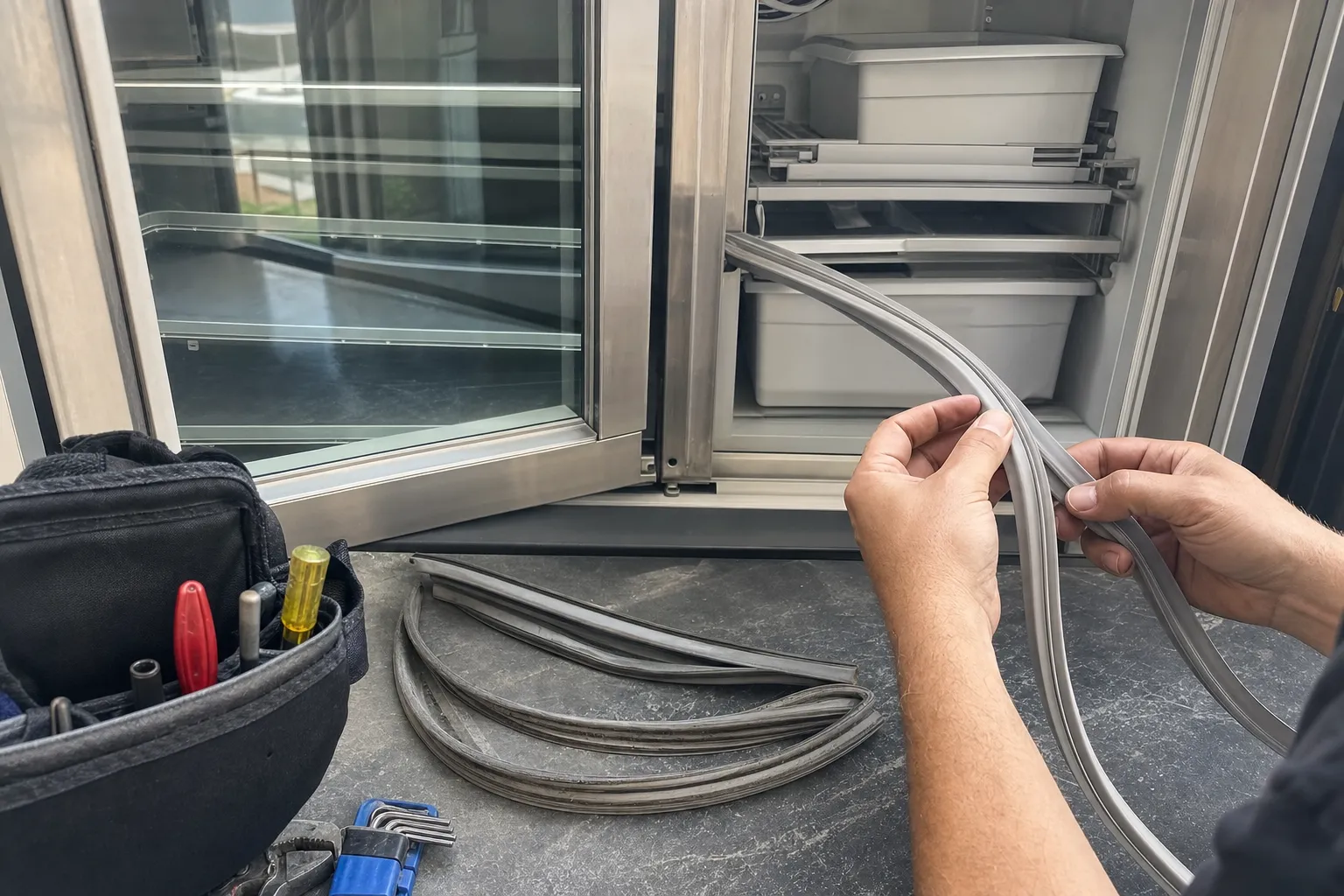
You can take frost off the walls and shelves of a running freezer by easing it loose with a plastic spatula, softening stubborn patches with a cloth wrung out in hot tap water, and drying each surface before it refreezes. That works for a light coating. If the ice is thick, glassy, or back within a week of clearing it, the freezer is telling you something: on a frost-free Sub-Zero, heavy ice means damp air is getting past the door or the automatic defrost has stopped doing its job, and scraping only buys time. Woodinville’s long, wet stretch from October into spring makes this worse, because every moment the door hangs open lets in moist air that freezes onto the first cold surface it touches.
Why ice forms in a freezer built not to have any
Frost is simply water vapor that has frozen. It comes from room air that slips in when the door opens, from a gasket that no longer seals all the way round, and from food stored uncovered or still warm. In a Sub-Zero, that moisture is meant to collect on the evaporator coil hidden behind the rear panel, not on the walls or your packages.
Every so often the control pauses cooling and switches on a defrost heater fitted to that coil. Once the coil is clear, a sensor or thermostat cuts the heater, and the melted frost trickles through a small tube into a shallow tray in the machine compartment, where condenser heat dries it off. When all of that works, you rarely see more than a faint dusting. When one piece fails, the coil ices over, airflow drops, and frost starts appearing where you can see it.
Clearing frost while the freezer keeps running
Work in short sessions so the compartment stays cold:
- Move the items from one shelf or drawer into a cooler, and close the door between passes.
- Slide a plastic or wooden spatula flat along the liner, under the frost, and let it flake away. Push gently; never lever or pry.
- For a crust that will not budge, press a cloth soaked in hot tap water and wrung nearly dry against it for a few moments, then lift the softened layer off.
- Dry the spot straight away with a clean towel. Water left behind becomes fresh ice within minutes.
- Take out removable baskets and drawers, knock their frost off at the sink, and dry them before sliding them back.
- Wrap or bag anything you return, so it stops feeding moisture into the air.
| What you see | Likely source | Your move |
|---|---|---|
| Light frost near the door opening | Seal, or a door left ajar | Clear it, then test the gasket |
| A sheet of ice on the rear panel | Defrost heater, sensor or thermostat | Clear the shelves and book a diagnosis |
| Ice on the compartment floor | Blocked defrost drain | Call; the drain sits behind panels |
| Cubes fused in the ice maker | Water valve or a jam | See the ice maker section below |
Why chipping and heat do more harm than the ice
A knife, ice pick or screwdriver is the most expensive tool you can bring to a frosty freezer. The liner is thin plastic over foam insulation, and behind the rear panel sits the coil that carries refrigerant. One slip into that coil turns a nuisance into sealed-system work, which typically runs $1,490–$3,400 once a technician has diagnosed it. Hair dryers and heat guns bring their own trouble: they can warp or crack the liner, and a plugged-in appliance beside meltwater is a shock hazard. Salt, de-icer sprays and harsh chemicals do not belong anywhere food is kept.
Ice jammed in the ice maker is a different job
Ice packed into the mold or chute is a jam, not frost, and Sub-Zero controls often flag it. On a 600 Series unit, error code 30 means the water valve solenoid stayed on for over 15 seconds five times; the advice is to look for a cube wedged in the ice maker and clear it before calling anyone. On a Classic (BI) model, code 30 8 05 asks you to confirm the ice maker is on, check that the freezer sits at or below 0°F, free any stuck cubes from the mold, then switch the breaker off for 30 seconds. A lone ice cube icon blinking with no chime on that series tells you the fill valve stayed open past its limit, so the control disabled the ice maker before water could overflow; check the water supply, then hold Alarm until CFC shows.
Turn the ice maker off before you reach in, and use a plastic utensil rather than metal. If the jam keeps returning, our ice maker repair page covers the valve and module work involved.
Signs the defrost system needs a technician
Clearing frost by hand is fine once. These signs say the cause is mechanical:
- Frost is back within days of a careful clean.
- Ice forms an even sheet across the rear panel, or the fan behind it starts to scrape or tick.
- Water pools or freezes on the compartment floor.
- Freezer temperatures creep up although the setting has not changed.
Before you phone, test the door seal by shutting a slip of paper in the door, trying the top, bottom, hinge side and handle side in turn. Paper that pulls free with no resistance means the gasket is letting air in. Brush the condenser too: Sub-Zero puts that chore on a six to twelve month cycle, sooner wherever pet hair drifts, with the aluminum fins left unbent and no chemical cleaner at all.
Typical ranges, made firm only after diagnosis: a defrost heater, thermostat or sensor $290–$670; a door gasket $280–$630; an evaporator fan motor $300–$660. Nothing gets swapped out before the cause has been traced; tracing it costs $89 in all, and that whole amount then comes back off the repair total should you nod the work through. The service call page walks through that credit. To work out which of the usual three culprits is to blame, read frost building up inside a Sub-Zero freezer. Households in Cottage Lake, Hollywood Hill, Wellington and Downtown Woodinville can reach us at (425) 321-3414.
Common follow-ups
- Can I use a hair dryer to melt the ice in my freezer?
- It is better not to. A hair dryer held close can warp or crack the plastic liner, and running a plugged-in appliance beside meltwater risks a shock. A plastic spatula and a cloth wrung out in hot tap water clear light frost more safely, and heavy ice is a cue to have the defrost system looked at.
- How do I reset a Sub-Zero ice maker after clearing a jam?
- It depends on the series. On a Classic (BI) unit with a single ice cube icon flashing, check the water supply and then hold Alarm until CFC appears. If SERVICE and ICE flash together on a 600 Series, switch the unit off for 10 seconds and back on, and call for service if it keeps coming back soon after.
- Why does ice keep coming back on the back wall of my freezer?
- Recurring ice on the rear panel usually means the automatic defrost is not finishing its cycle. A failed heater, a faulty sensor or thermostat, or a blocked drain lets the hidden coil freeze over, and the moisture then settles where you can see it. Clearing it by hand will not break that loop.
- Should I unplug the freezer to get rid of a small amount of frost?
- No, a thin coat does not need a full shutdown. Ease it off with a plastic scraper, soften stubborn spots with a warm damp cloth and dry each surface at once. Keep a full defrost for ice heavy enough to jam drawers, and find out why it formed before it builds again.